
Unique postdoctoral positions at the University of Pécs
2026
Jan
26

The University of Pécs has created new, groundbreaking postdoctoral positions, the first of their kind in Hungary, which represent a milestone in the academic renewal of the institution. The programme represents a conscious change in approach: it is based on international mobility, competitive selection, and targeted research cycles. This approach is unique in Hungarian higher education, closely resembling academic practices in Western Europe and the United States, while also strengthening the scientific visibility and attractiveness of the University of Pécs.
The traditionally imagined linear and secure teaching-research career path, in which someone progresses through predictable steps within an institution, does not actually exist in Western European and American academic practice. "There, from the beginning of one's career, the path is defined by short, typically 1-2 year fixed-term positions, intense mobility, and constant competition. It is not typical for someone to climb the ladder at a single university, but rather to build their professional portfolio through different challenges at different institutions", said Dr. András Komócsi, Vice-Rector for Science at the University of Pécs.
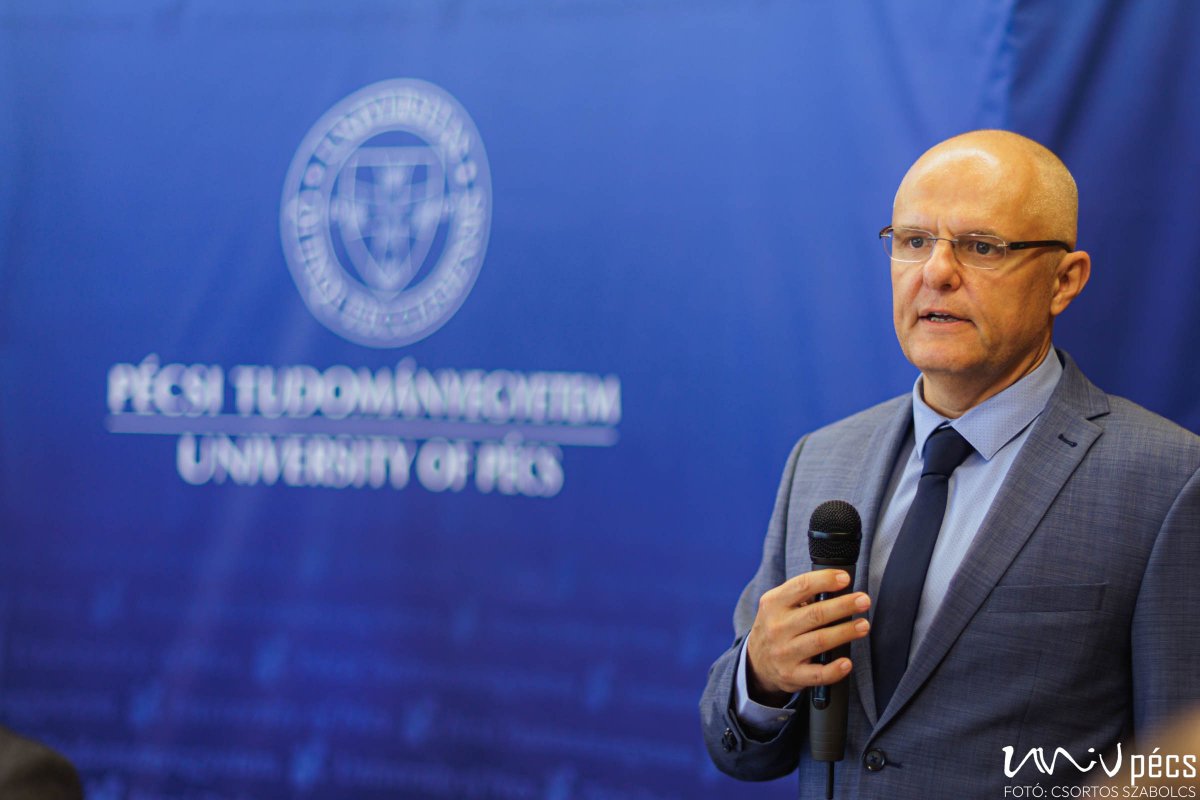
Today, the systematic introduction of postdoctoral positions in Hungary has become indispensable: not only does it bring dynamism to the functioning of the university, but it also contributes to the institution's recognition in the international academic arena.
The University of Pécs, which is Hungary's most international university in terms of the proportion of foreign students, has already achieved spectacular results on the student side: "the high proportion of foreign students is now one of the key factors in the economic viability of the faculties. However, this is much less evident on the teaching and research side. The proportion of truly foreign teachers is low, which in the long run may become a limitation on academic quality, thus failing to create real scientific appeal. Therefore, it is particularly important that teachers and researchers with international experience and mobility also appear on the teaching and research side", the vice-rector emphasised.
The EDUC university association plays a key role in this process, with the aim of improving the functioning of universities, including the coordination of scientific cooperation, infrastructure, and research communities. The newly launched EDUC postdoctoral programme, which is unprecedented in Hungary, is part of this thinking: it is a flexible, internationally mobile structure that lasts for two years and requires a period spent in Hungary and at a partner institution. It is particularly noteworthy that PTE has not only joined this model, but has also made an outstanding contribution to the EDUC community by creating two postdoctoral positions, one of which will be filled by a foreign researcher.

"EDUC itself is a very active and fruitful network among the international relations of the University of Pécs", emphasised Dr. András Komócsi, who also said that two postdoctoral positions were created within the framework of the programme, preceded by several rounds of preliminary professional consultations. "The goal was to ensure that the application was backed by genuine receptiveness and a clear professional programme. One of the positions will be filled at the Faculty of Business and Economics, and the other at the Faculty of Humanities and Social Sciences – the latter is particularly important, as the postdoctoral system is traditionally more prevalent in the natural sciences."
The programme is also unique in terms of funding, as it is not implemented from a separate EDUC budget, but from the university's quality performance support fund, which is managed by the institution's vice-rector for science. This is the fund from which PTE finances, among other things, publication fees, internal grants, and performance-based allowances. Although this amount alone does not cover the university's research expenses, its targeted use fits well with the spirit of the postdoctoral programme.
Overall, the EDUC postdoctoral positions represent a first, conscious step towards a modern, competition-based, international academic model. They point the way towards a university operation in which mobility, openness, and professional challenge are not exceptions but basic requirements.


- Log in to post comments
News









Faculties
University of Pécs
International Centre | Rector's Cabinet
H-7622 Pécs, Vasvári Pál str. 4.
+36-72/501-500/61682


University of Pécs | Chancellery | IT Directorate | Portal group - 2020.