
The Future of Wine: New De-alcoholisation Technology Courtesy of PTE SZBKI
2026
Mar
16

The Research Institute for Viticulture and Oenology at the University of Pécs (PTE SZBKI) offered a glimpse into the future of Hungarian winemaking on 13th March in Palkonya. During an interactive press conference, participants were introduced to the world-class de-alcoholisation technology developed by the Australian company Flavourtech.
Consumer demand for low-alcohol or alcohol-free wines is steadily increasing globally, including in Hungary. In response to this trend, the PTE Research Institute for Viticulture and Oenology organised a unique "de-alcoholisation work week" for renowned Hungarian wineries. To conclude the event series, the technology provided by Flavourtech was presented to the press. This equipment is currently being used to de-alcoholise batches from several prominent Hungarian estates, including Bock, Gere, Koch, Frittmann, the host Mokos Winery, and the University of Pécs Wine Estate.
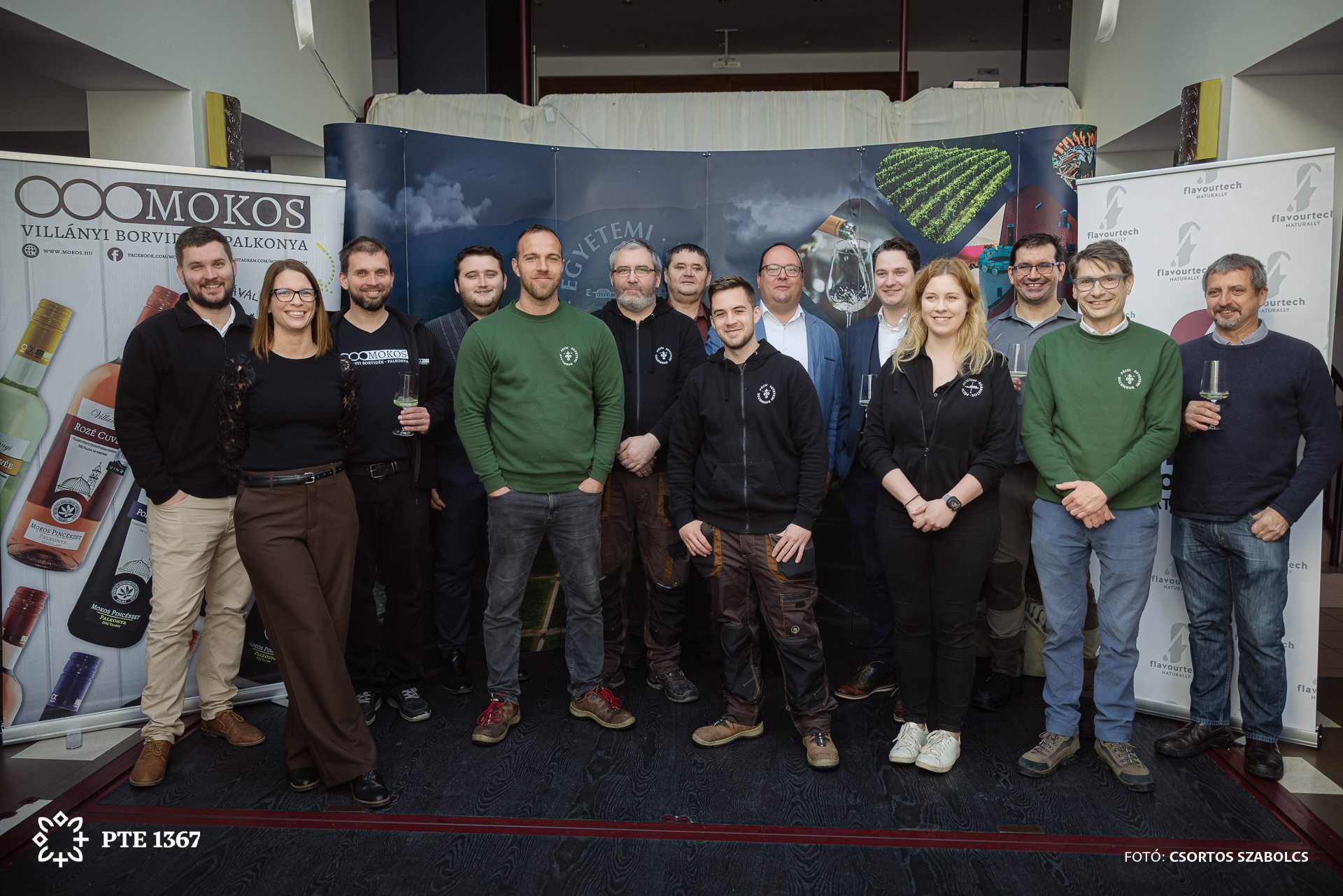
De-alcoholisation at PTE SZBKI
The Australian-based Flavourtech was founded in 1987 and is now a leading designer and manufacturer of innovative aroma and flavour recovery solutions, exporting to over 60 countries. The company has revolutionised the scent, taste, and quality of food, beverages, and health products. In relation to winemaking, they have developed a method that removes sulphur from grape juice while producing excellent flavours and extracts, all while preserving the product’s natural characteristics.
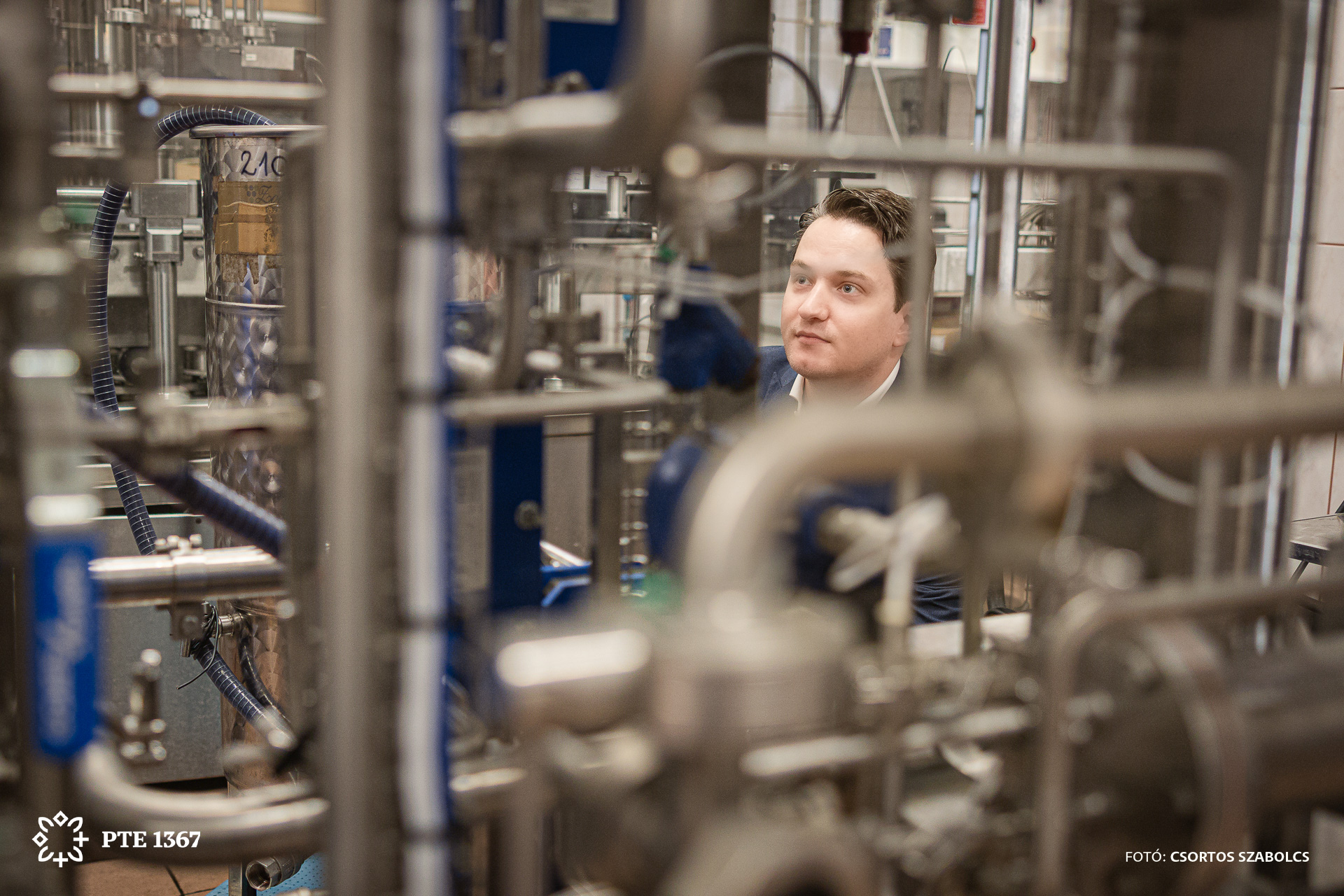
The specialised equipment was originally used for aroma extraction in other sectors, such as perfumery and coffee production. However, it later proved to be highly effective for the de-alcoholisation of wines as well. During the demonstration, attendees were able to observe the machine in action, with Flavourtech representative Klaas Leenders providing a detailed explanation of the process.
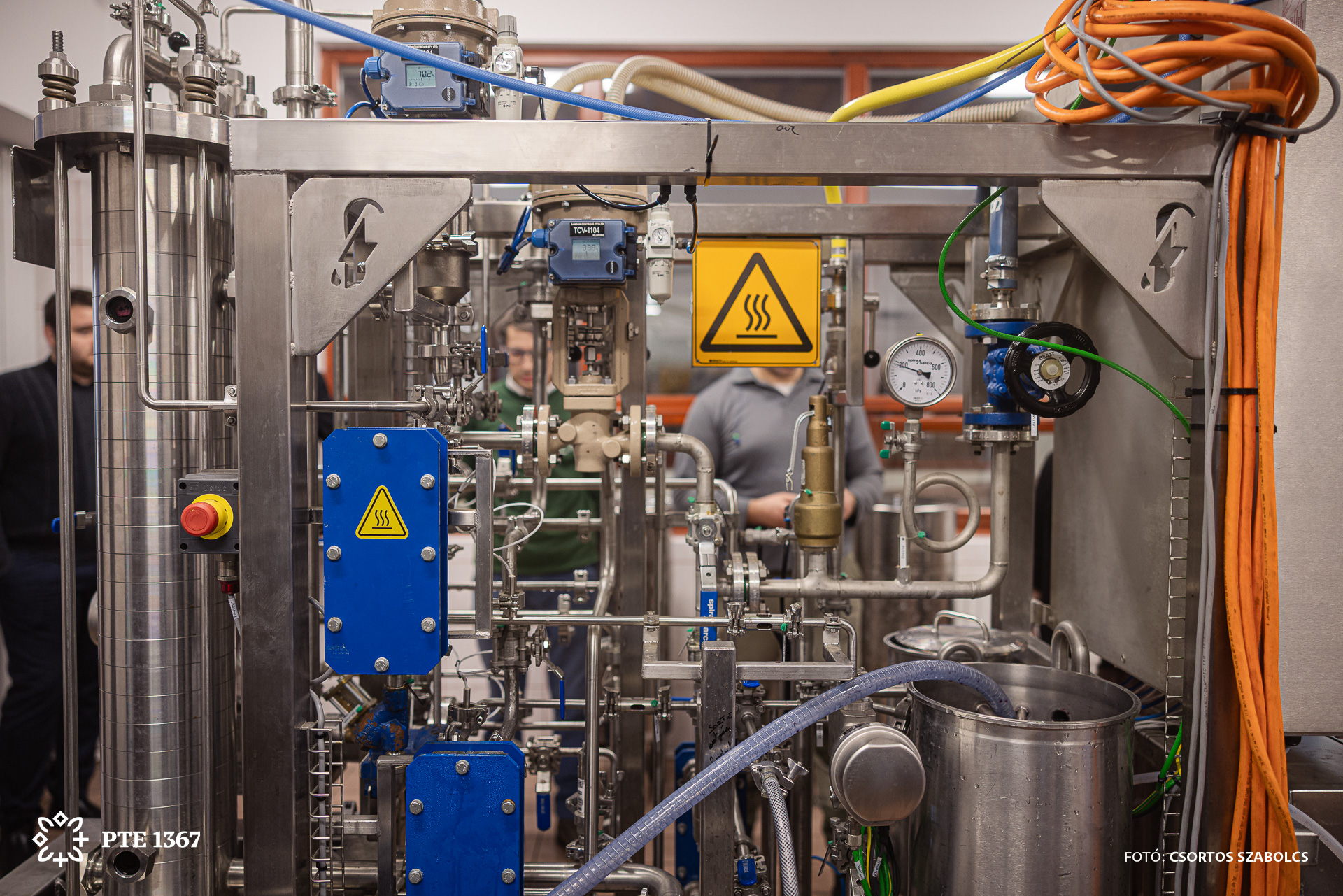
The Spinning Cone Column (SCC)
The technology, known as the Spinning Cone Column (SCC), has transformed the way flavours and aromas are recovered and extracted. It uses a chemical-free process involving steam under vacuum conditions. Compared to traditional extraction technologies, this method is far gentler; thanks in part to the low thermal impact, the equipment is better able to preserve delicate flavours and aromas.
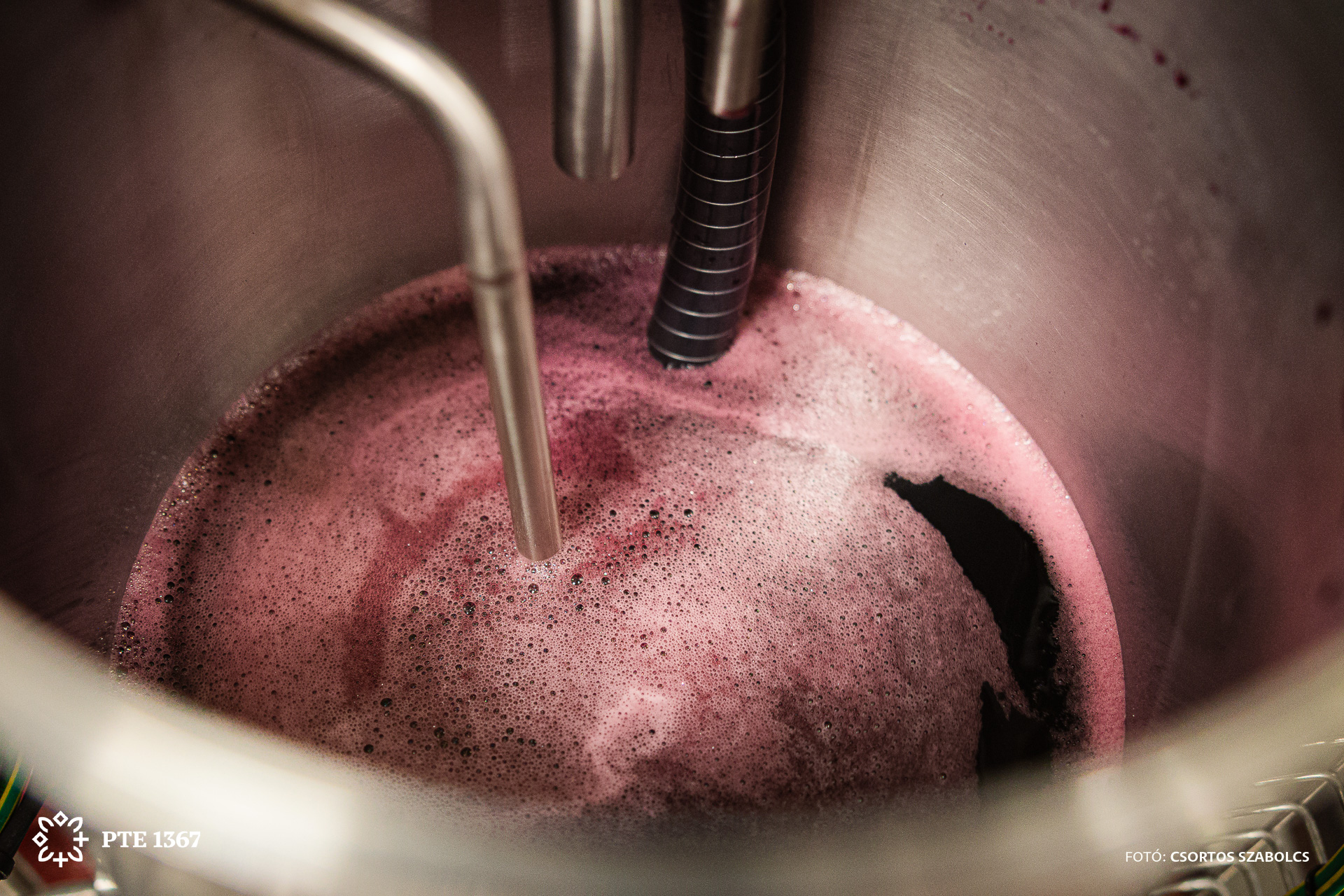
The SCC—which is now also featured on certain wine labels—is a vertical stainless steel vessel containing a central rotating shaft and a series of alternating rotating and stationary cones. The wine is pumped into the column, where it first passes over a stationary cone surface before reaching the bottom of a rotating cone. The centrifugal force generated by the rotation creates a thin film of liquid on the cone's surface, which flows upwards.
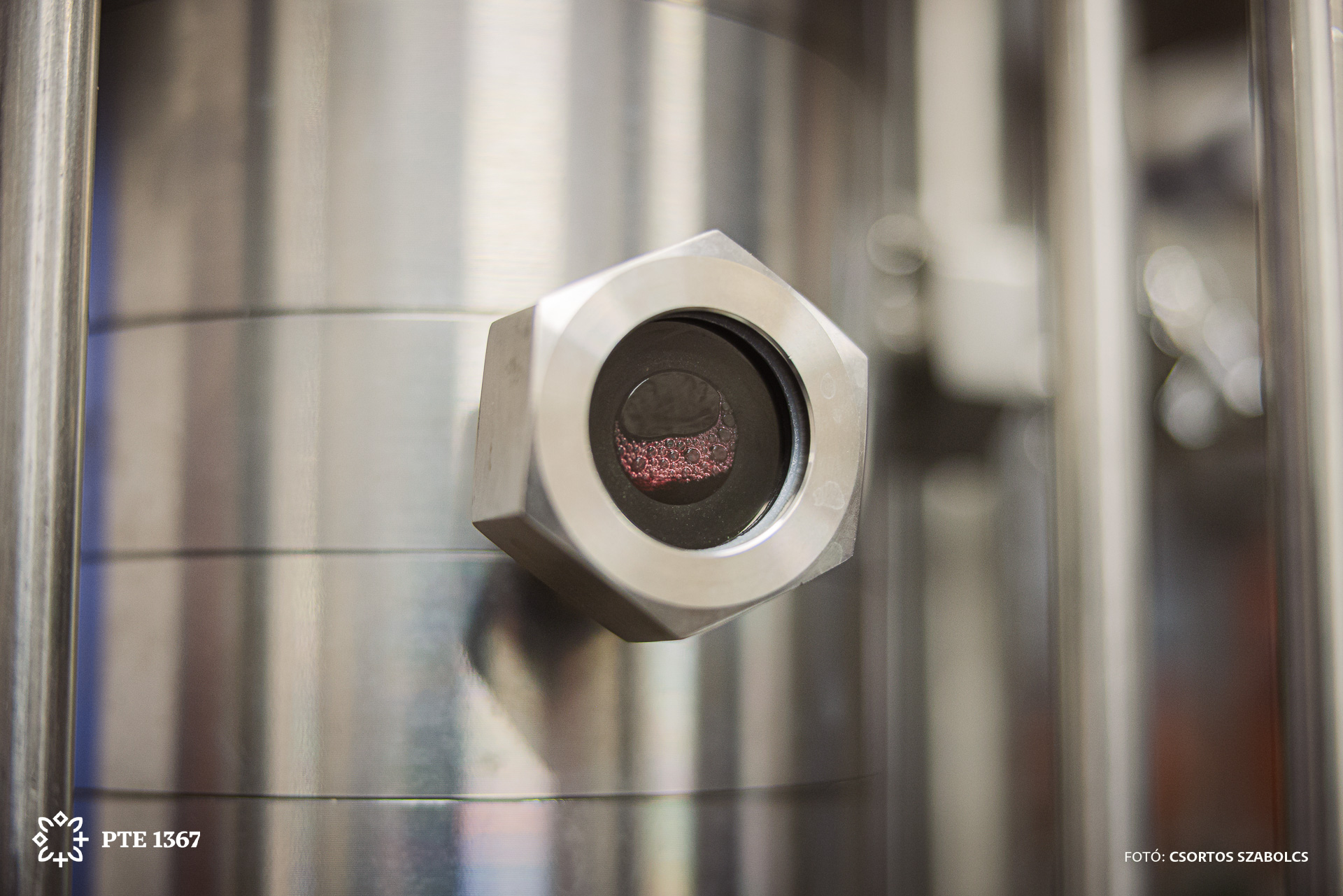
During this process, steam introduced in a counter-current flow causes the volatile components—primarily aromas and flavour compounds—to separate from the rest of the liquid. A further advantage of this procedure is that its operating parameters are highly flexible, allowing it to be tailored to the specific composition and aromatic profile of different wines.
Scientific Support for Domestic Winemakers
The introduction of this technology was initiated by the PTE Research Institute for Viticulture and Oenology. The Institute’s goal is to provide professional support to domestic winemakers— particularly those in South Transdanubia and nearby regions — by exploring and testing modern de-alcoholisation procedures. Prior to acquiring the equipment, the Institute’s experts visited Australia to study Flavourtech’s technology and operations firsthand, before bringing the necessary machinery to Hungary for research and development work.
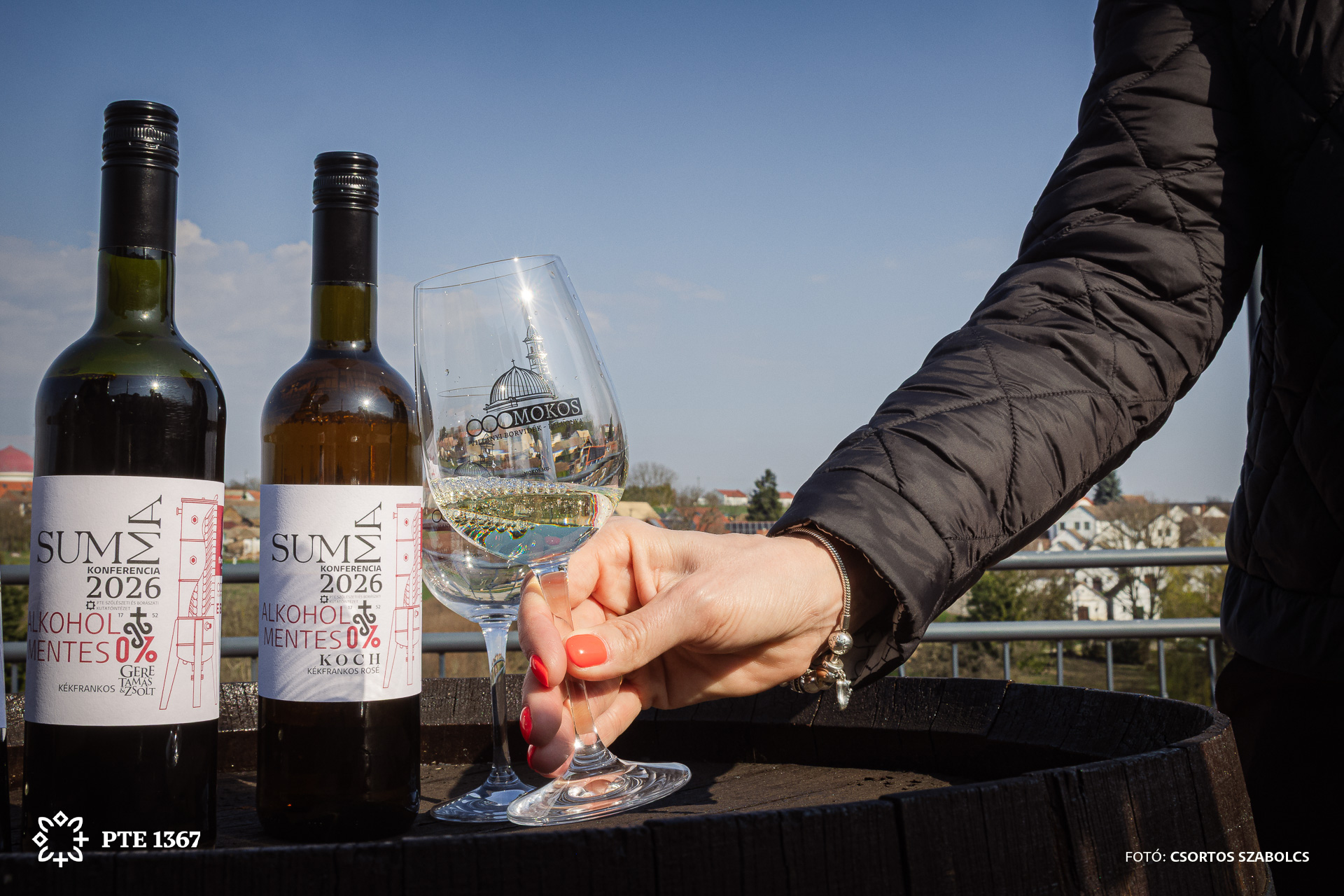
The de-alcoholised batches produced on-site are part of a scientific research project. The results, along with the final, matured wines, will be presented to the general public on 20th May at the SUMMA international conference.


- Log in to post comments
News






Faculties
University of Pécs
International Centre | Rector's Cabinet
H-7622 Pécs, Vasvári Pál str. 4.
+36-72/501-500/61682


University of Pécs | Chancellery | IT Directorate | Portal group - 2020.