
Africa as a Key Player in the Changing World Order: Anniversary Conference Held at the University of Pécs
2026
Apr
29
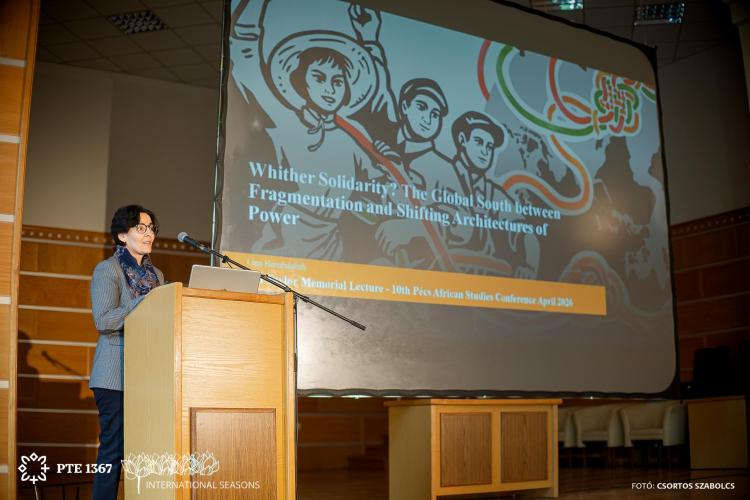
What geopolitical strategies will shape the relationship between Africa and the world in the 21st century? The African Studies Centre at the University of Pécs held its tenth international academic conference, the Conference on African Studies, in the Damján Vargha Hall of the Faculty of Humanities at the University of Pécs on April 29, 2026. This year, the event not only examined the continent’s rise and “South-South” cooperation but also strengthened the university’s international visibility as a centre for African studies in the Central and Eastern European region.
At the conference’s opening, Dr. István Tarrósy, Director of the Research Centre, emphasized that over the past decade, Pécs has become a scientific hub that connects the region with the African continent through an interdisciplinary approach, a professional journal that has been published continuously for 20 years, and an extensive network of international contacts. The significance of the event was heightened by the fact that the anniversary conference was held in conjunction with the University of Pécs’s International Seasons programme series and “Africa Days,” serving as a bridge between the academic sphere and the broader public.
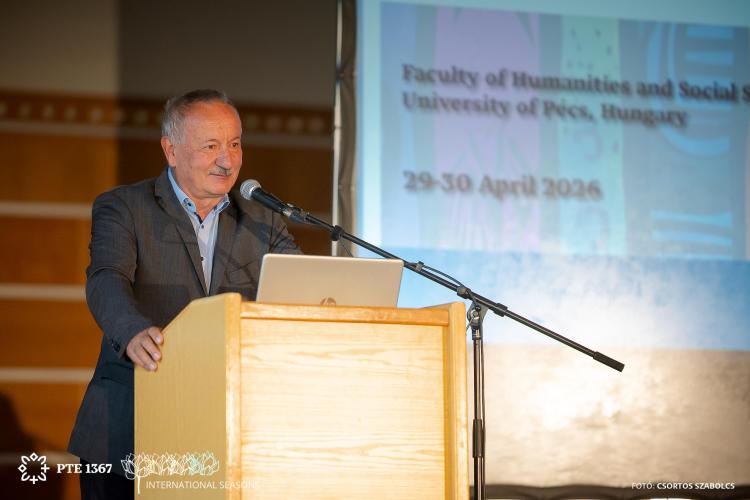
In his opening remarks, Dr. Attila Miseta, Rector of the University of Pécs, cautioned that we live in an extremely rapidly changing, conflict-ridden world where the fragility of past global integration and international supply chains (whether for medical devices or other goods) has become more evident than ever before. According to the rector, the scientific community bears a tremendous responsibility in this tense environment: the channels of dialogue must remain open, and forums must be created where cooperation and shared thinking can override political divisions.
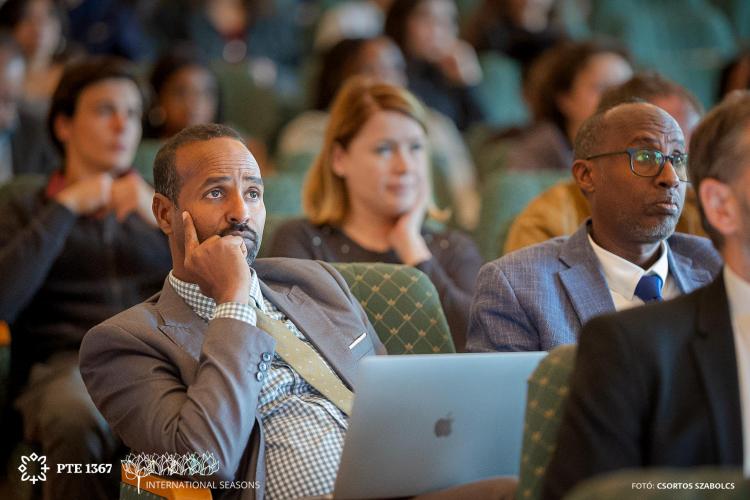
The guest of honour at the event, Her Excellency Margueritte Francoise Nyagahura, Rwanda’s Ambassador to Hungary, emphasized in her speech that the study of Africa is no longer merely a theoretical issue, but a tool for understanding the most dynamic global social and economic transformations. Using Rwanda as an example, she illustrated how a country can become a model of resilience, innovation, and gender equality, while emphasizing the importance of the strengthening educational and diplomatic ties between Hungary and Rwanda.
The backbone of the professional program was the Ian Taylor memorial lecture, with which the research centre paid tribute to the memory of the renowned professor who passed away in 2021. In her keynote address, Dr. Lina Benabdallah (Wake Forest University) analysed the shift in the world order through the lens of China-Africa relations. She explained that today we are witnessing not merely a realignment of power but a deeper, structural shift in the world order, in which China, through its narrative of solidarity and large-scale infrastructure investments—such as the renovation of the historic Tazara railway—offers an alternative to Western models.
During the two-day conference, researchers from 10 countries explored these complex issues, reaffirming Africa’s indispensable role in the future global order. The event program is available here!
Article: Hanna Leemans
Photos: Szabolcs Csortos


- Log in to post comments
News





Faculties
University of Pécs
International Centre | Rector's Cabinet
H-7622 Pécs, Vasvári Pál str. 4.
+36-72/501-500/61682


University of Pécs | Chancellery | IT Directorate | Portal group - 2020.