
Chinese delegation at the University of Pécs
2026
Jun
25

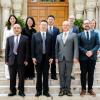
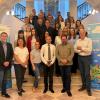
On 23 June 2026, the University of Pécs welcomed a high-level executive delegation from China. The focus of the negotiations with the representatives of the world-leading Shandong University was on strengthening the ties between the two historic institutions, as well as preparing an official inter-institutional framework agreement.
For more pictures of the meeting: click here!
One of the most outstanding institutions in Chinese higher education arrived in Pécs with a high-ranking delegation: the envoy was led by Executive Vice President Wu Zhen, who was joined by Dean Zhang Chenghui, Deputy Director Dong Chunjie, as well as Zhang Jiaqi and Yang Yinuo from the directorate responsible for international relations. On the domestic side, leaders of key areas at the University of Pécs took part in the meeting, including Prof Dr András Komócsi, Vice-Rector of the UP, Prof Dr Boldizsár Czéh, Head of the János Szentágothai Research Centre, as well as Prof Dr István Tarrósy, Director, and Dr Gyöngyi Pozsgai, representing the International Directorate.
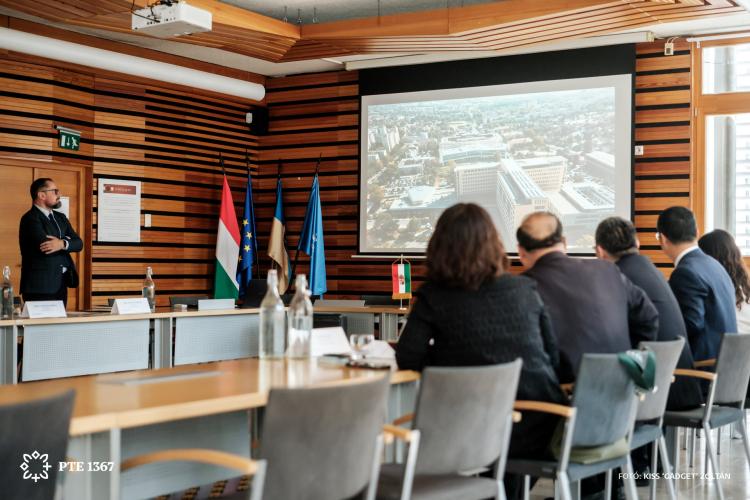
During the meeting, historical and structural parallels between the two institutions quickly became apparent. Just as the UP is the oldest seat of higher education in Hungary, Shandong University, founded in 1901, is also considered one of the cradles of the modern Chinese university system, which the guests highlighted with particular pride. The scale of the Chinese institution is astonishing: they currently have eight campuses across three cities, are already working on developing a ninth, and educate approximately seventy-five thousand students. Similar to the Pécs model, an extensive clinical and hospital network is affiliated with them, making medical and health sciences one of their strengths as well. Further priority areas are mathematics and natural science disciplines, engineering studies and robotics.
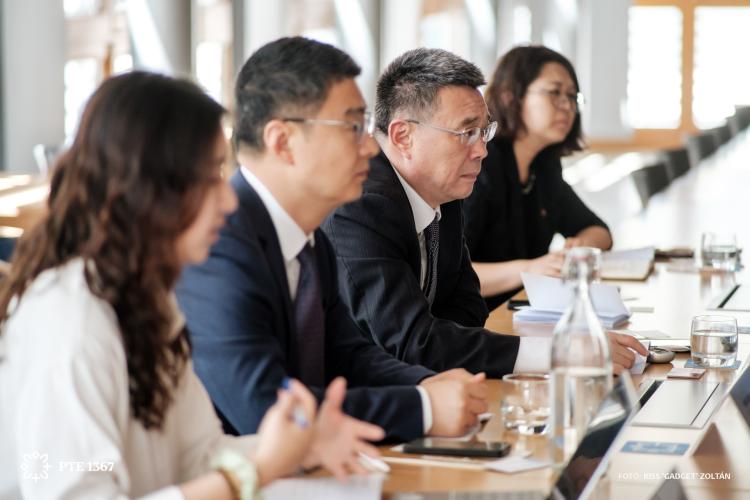
The dynamic development and internationalisation of Chinese universities over the past two decades can also be observed at Shandong University, where the number of bachelor's, master's and doctoral programmes taught purely in English is continuously expanding. In addition, they maintain close cooperation with the best in the world, including the Australian National University. The Pécs connection, however, did not start from nowhere; thanks to the UP's conscious summer and winter university programme developments, students from Shandong had previously visited Pécs as partners of Shanghai University. The students who arrived last year returned home with such positive experiences that the Chinese partners themselves initiated the current institutional visit during their European tour. Their goal was to conclude an inter-institutional framework agreement, a so-called MoU, that goes beyond short-cycle programmes.
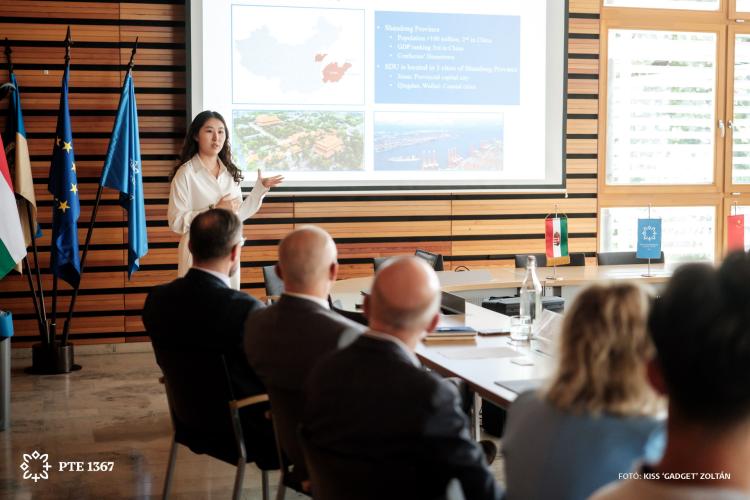
At the meeting, the parties quickly moved on to concrete opportunities for cooperation. Alongside the obvious medical and health science, as well as law and business programmes, archaeology and cultural heritage protection also proved to be an exciting common point. While Pécs is a UNESCO World Heritage site, the province hosting the Chinese university—from which the world-famous Tsingtao beer also originates—encompasses Qufu, the birthplace of Confucius. This rich historical background could form the foundation for unique courses and research on both sides in the future.
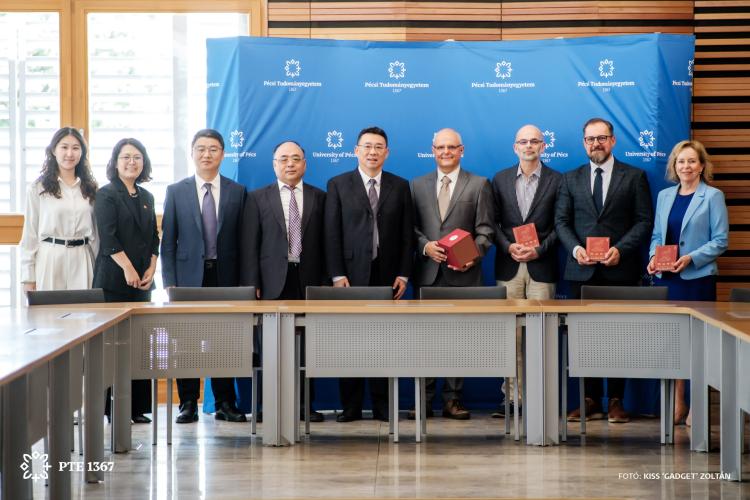
As the next operative step in the cooperation, so-called visiting researcher and lecturer exchanges are planned to start, so that professional colleagues can directly assess the areas of joint work. The delegation also officially invited the UP leadership for a visit in the near future. In Chinese culture, the prerequisite for a lasting and fruitful partnership is repeated meetings and the deepening of personal trust. The ultimate goal of the joint work, highlighted István Tarrósy, is to achieve the status of "Lao Pengyou", or "old friend" as the Chinese language calls it, when the university representatives understand each other effortlessly, and can maintain a strong, high-quality academic cooperation.


- Log in to post comments
News








Faculties
University of Pécs
International Centre | Rector's Cabinet
H-7622 Pécs, Vasvári Pál str. 4.
+36-72/501-500/61682


University of Pécs | Chancellery | IT Directorate | Portal group - 2020.